










Game of Any Kind
a manifesto and thesis for local food infrastructure and agricultural innovation.
INTRODUCTION
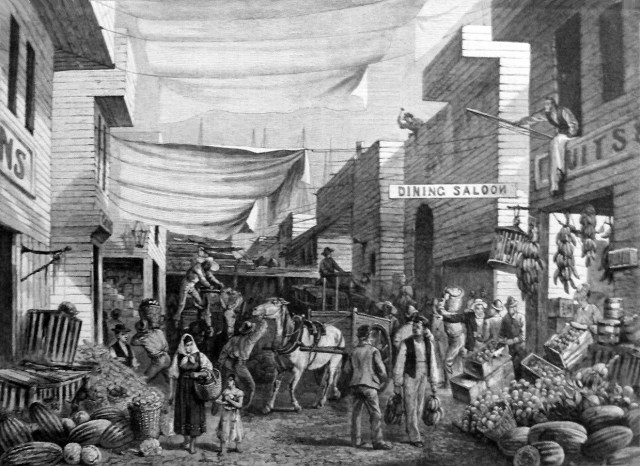
In the early 19th century, before the amalgamation of the American Food System, our restaurants and eateries depended almost entirely on local food sourcing. We didn’t have the robust transportation and refrigeration technology existing today.
In 1861, William Carson of Detroit’s Carson’s Dining Saloon placed a local advertisement boasting, “Farmers, hunters and others with game of any kind will please call upon William Carson, Carson’s Dining Saloon.” At one point, and all points prior, direct relationships with local suppliers were a necessity, with restaurants procuring its countryside to supply their restaurants with its community’s dishes.
After the Industrial Revolution, we achieved a national food abundance, making food affordable, omnipresent, and meeting the growing functional demands of urbanization. Many argue the industrial revolution's impact on food supply fed the nation enough to give birth to all the innovative progress created in the past 100+ years (see Figure 1). However, with a priority of scale over sustainability, our farms and cattle were ridden with chemicals, pesticides, and hormones. Food processing and distribution transformed from a liberating function of American Society into factories depriving our restaurants of the fruits to create wholesome dishes for its citizens and visitors - stimulating both their nutrition and dopamine.
South Florida, in particular, hosts 230 sunny days annually, with ample rainfall, and multiple growing seasons. Our state produces 64% of the US Value for fresh tomatoes, 51% of oranges, 45% bell peppers, and is the 9th largest beef cow state in America. Yet close to only 20% of our restaurants’ food is sourced locally.
Tesla reports that Full Self-Driving software (v 12.5) has accumulated more than 1.3 billion miles worldwide as of Q1 2025. Over that distance, the system records one (1) police-reportable crash every 6.26 million miles, roughly nine times better than the U.S. average of one crash per 670,000 miles (NHTSA 2023). Tesla calculates operating costs at $0.50 per mile, far below the American Trucking Association’s 2024 estimate of $1.20 for diesel trucking. Tesla’s navigation database now covers 98% of U.S. roads (AI Day 2022), and Musk’s robototaxi rollout plans to expand to all U.S. cities by the end of 2026. Citizens will wake up one day, with cars surrounding them with nobody in the driver’s seat. The transport of just people from one place to another is the most narrow utility of this technology’s capabilities. FSD will catalyze unbeknownst use for local economies. Florida’s HB 1027 (2019) already authorizes fully driverless deployment. There are only six (6) other states allowing for the operation of fully autonomous vehicles without a human driver.
Concisely, we need incentives & technologies for growers to prioritize local markets over exports; we must prepare for a future where our food improves citizen quality of health, stimulates the economy, supports our farmers, and begins a transition back to a community-sourced society. A society where our fruits, meats, and vegetables don’t have to be shipped from the other side of the planet when it exists only an hour by car. We’re elated to say that in 2026, we’ll have the technology for the solution that was impossible until now.
YOU ARE WHAT YOU’VE EATEN…
When our parents & grandparents went shopping for groceries, the food they bought was real food. Today, the skeptics turned out to be right, in that our corporations and food distributors were cutting corners by adding ingredients - and we look around and wonder why America has an increasingly obese populace. Funny enough, when perceptions of organic foods vs conventionally grown were measured across age groups, it becomes obvious how we got here in the first place.
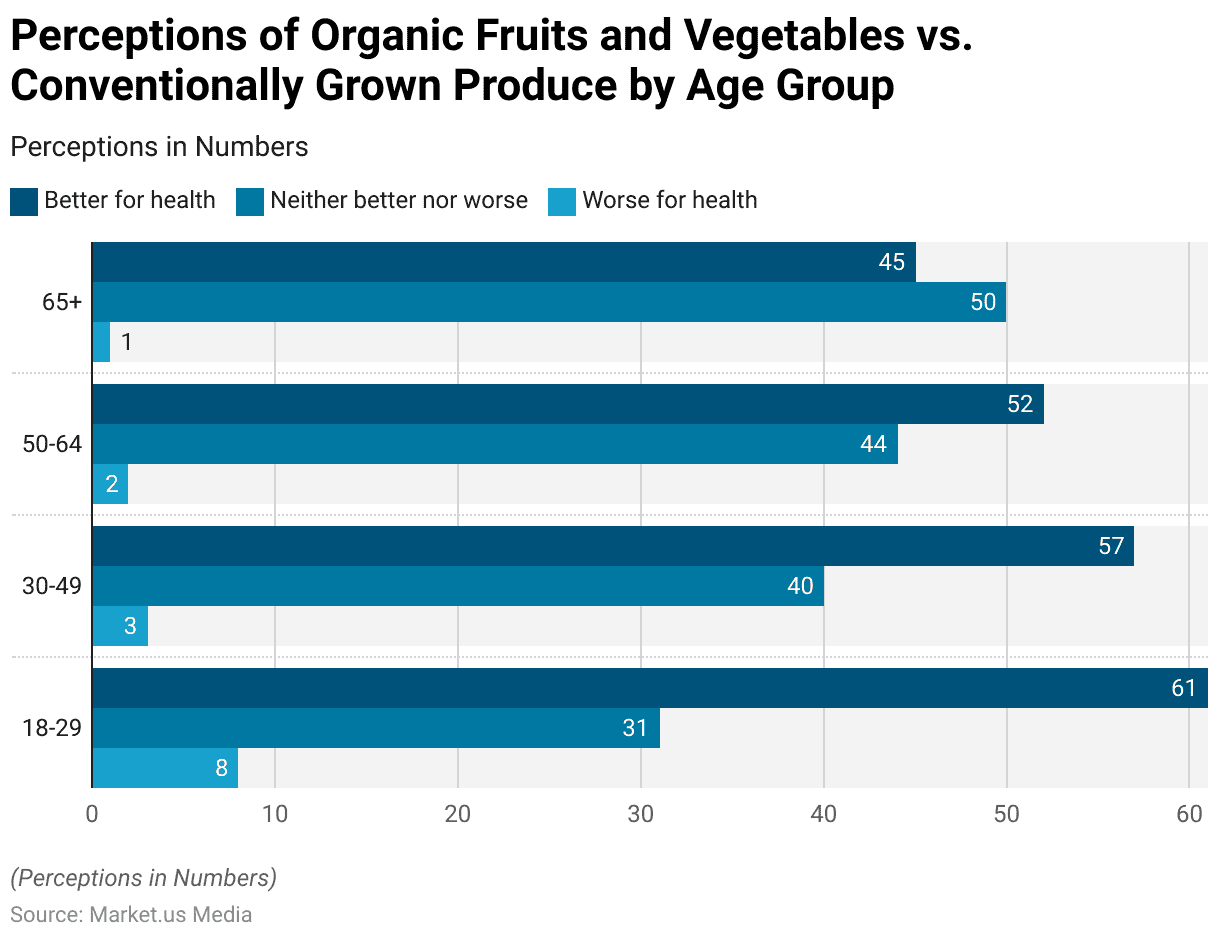
80% of Gen Z agree food quality is important in purchasing decisions, and 70% are willing to spend more on high-quality food. When our generation dominates discretionary spending, big food will be forced to pivot their infrastructure and logistics to meet the inverted demands of its newest customers.
BUT THE INCUMBENTS CAN BLEED
Sysco’s grip on U.S. food-service is built on 340 multi-temperature warehouses covering 56.6 million square feet across 10 countries and an owned fleet of 18,000 refrigerated trucks. Sysco moves product to 730,000 customer sites, giving the company an estimated 17% share of a $360 billion market - the largest of any distributor. Sysco’s density lets them buy cheaper, carry 400,000+ SKUs, and deliver daily, supporting an 18.5% gross margin on $78.8 billion FY-24 sales even as net prices rose just 1.5%. The scale machine, however, holds $832 million a year in cap-expenditures, ~$1 billion in depreciation, and $12 billion in debt (net-debt/EBITDA ≈ 2.7×) all to sustain an operating margin that hovers near 4%.
Those same assets can act as a burden under the right conditions. Restaurants can shift orders with near-zero switching cost while group-purchasing organizations and cloud marketplaces replicate Sysco’s reach without its overhead. The company is trying to pivot, shipping an e-commerce third-party marketplace, adding “local” SKUs, and investing in traceability tagging for its products. However, Sysco’s heavy cold-cube network, union drivers, and dividend-plus-buyback cash commitments limit speed and flexibility. Sysco has maintained the lead through their infrastructure and purchasing muscle that excel at volume. The moment volume cedes, management will be at standstill, forcing dilution, more debt, and an opportunity for a more agile, better timed competitor to play an entirely different game.
WHAT’S FOR DINNER?
Decades ago, the majority of food spending was on food at home; now Americans spend more on dining out than on groceries. Even adjusting for inflation, restaurant spending is growing far faster than grocery spending. From 2019 to 2023, spending on dining out rose 13.5% compared to only 3.4% growth in groceries. In fact, 2023 alone saw restaurant spending jump 5% (inflation-adjusted) while grocery spending fell. Post-pandemic, overall restaurant openings have rebounded strongly (up 10% nationally in 2022-23, and a further 6% in 2023-24) Within that growth, many newcomers are health-conscious or community-oriented concepts. Chefs are opening farm-to-table bistros, organic cafés, and sustainable fast-casual spots at a higher rate than ever. Even mainstream restaurant menus are being reshaped by this demand: 54% of adults actively look for locally sourced food when dining out, and 46% say having organic or environmentally-friendly food is important in their restaurant choices. Industry experts rank sustainability and local sourcing as the #1 culinary trend for 2025 menus.
Why are restaurants still sourcing so little locally? A key reason is the restaurant supply chain has long been dominated by a few broadline distributors - Sysco and US Foods - whose model is built on efficiency, volume, and centralized procurement. These incumbents excel at delivering bulk products from large-scale manufacturers, but they are not inherently set up for small-scale, fragmented local sourcing.
The outcome is that, despite growing demand, the legacy distribution infrastructure remains geared toward trucking foods across the country rather than sourcing from just down the road. The typical ingredient on a U.S. plate has traveled 1,500+ miles from farm to table, and Florida’s agricultural production often gets shipped out while Florida restaurants import similar items from elsewhere. However, 78% of consumers are even willing to pay at least a 10% premium for local products. The incumbents’ one-size-fits-all distribution model is misaligned with the emerging local-first restaurant landscape.
March 2026
As much as I’d like to share the remaining parts - which have evolved from a thesis to a product & business roadmap - there are several secrets that, left omitted, would hollow out the rest of the writing for something too tactical to share on my website. My time now is spent designing the user-facing product, talking to Michelin-starred chefs in Fort Lauderdale, and getting out something that can impact the public positively.