






Running a Show
Building customer-led events for House Hats Collective
For roughly a year in college, I ran the Gainesville branch of House Hats Collective, an events company and record label primarily based in Florida. Over five years, House Hats has booked artists such as John Summit, Dom Dolla, Cloonee, Beltran, ChaseWest, Prospa, and many more.
If I’m being honest, it truly was the only thing that kept my 20-year-old self excited to stay at UF for as long as I did.
My title never really captured the job, so I’ll describe it instead. As a project lead, my role was to decide:
- What events we were going to build
- Which artists we were going to book
- At which venues
- When
- Precisely why our core customer would care, buy a ticket, and choose our event over the dozens of others happening at an SEC school
Outside of that, before and during each event, our focus was on:
- Formalizing offers
- Finding agents
- Collaborating with venues
- Of course, selling tickets
- Managing the artists at the event
- Putting on what was hopefully a profitable event
The notoriously unique thing about running these events is that every single night was a product launch. You shipped to a few thousand people, and you had one opportunity to get it right. There were no do-overs.
When I came in, there was a central disagreement about how we should approach an event. The company’s existing model was to spend as little as possible up front and then rely on marketing to pull a crowd. I came in as the youngest manager in Gainesville history, looked at it completely differently, and wasn’t shy about saying so.
Within my first week, I made it clear that I cared deeply about two basic numbers:
- How many people showed up
- How much they spent, both at the door and throughout the night at the venue
Everything else followed from those two numbers, and my first task was figuring out what moved them.
I realized pretty quickly that the overall budget, whether big or small, didn’t actually explain an event’s potential for success. Our spending mix barely changed between shows. Artist fees typically made up about the same share of the budget, yet events with nearly identical cost structures produced completely different financial and turnout results.
The only factor I found that consistently tracked with those differences was the artist we booked.
Simply put, the most important part of putting together an event was deciding who people would come to see. The hidden answer came from understanding their sense of identity and working backward from there.
Of course, telling executives within my first month that their entire approach was wrong wouldn’t change anything, and I’d probably find myself out of a job as quickly as I got into it. Instead, I laid out:
- Which artists people would actually pay to see
- What we would give up by abandoning the old model
- What the new approach could make on a show-by-show basis
I presented all of the numbers on a call so they could reach the conclusion themselves instead of feeling like some consultant had handed them a solution.
The work behind the recommendation took several weeks. I ran surveys, studied what competing events sold, and reviewed our own results. Everything came back to one question: What makes someone buy a ticket?
I described the answer using a simple framework:
Likelihood of attendance = desire + cost utility - barriers
Desire was simply how badly someone wanted to see the artist. There’s a special component to desire. IYKYK. Cost utility measured whether the experience actually felt worth the price. Barriers included timing, location, competing plans, and anything else that made attending harder.
Barriers matter much more than people like to admit, which is why it’s extremely important to account for them when planning events.
I kept returning to this framework because I was asking the company to take a completely different kind of risk. I wanted to give the decision a quantitative and logical backbone that reduced the risk they felt they were taking.
It worked.
My first event cleared the bar, and we generated a 40% profit on ticket sales alone, well above the 25% benchmark we considered strong based on previous events. We sold more than 800 tickets and handsomely beat the forecast.
Part of the result obviously came from planning a deeper run of shows and committing to that plan. But the real change had happened months earlier, when the company decided to build an event backward from the customer instead of forward from the budget. There are several other contingencies that we accounted for, but it’s much more exciting to keep those secret and not publicly disclose the winning formula.
That approach eventually gave us the confidence to run larger events, backed by a forecasting model built from more than 30 event P&Ls and a plan that could scale from one branch to 15. Our planning horizon expanded from two months to two years, and our ability to book very expensive, major artists that I’m sure you’ve heard of grew exponentially.
It was easily the most fun job I’ve ever had. I made lifelong friends and collected many entertaining memories from running artist relations and gaining broader exposure to the house music community, which is the fastest-growing genre of music on the planet.
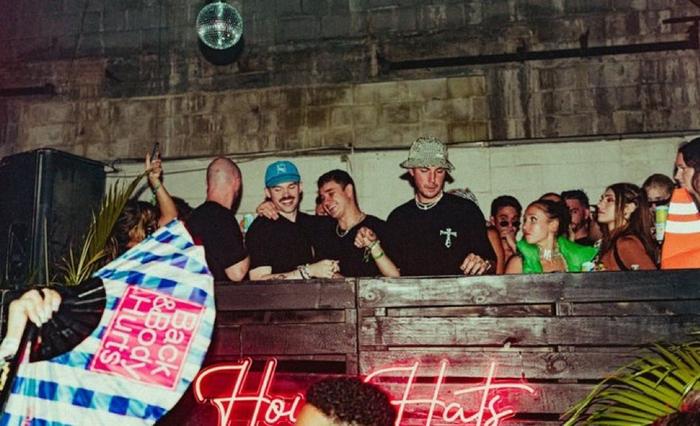
I’ll truly never forget the euphoria of the night of a show, standing onstage and looking out at thousands of people dancing with their friends and enjoying themselves. I’d share this excitement with my executives and remind them how proud we should feel over and over throughout the night, hinting at the value we could create and the benefits House Hats could reap by working backward from the customer.